The One Thing that GREAT Teams Do that GOOD Teams Don’t

11 Jan

“Some people never look up till they are flat on their back.”

Everyone learns from their mistakes (well, some people don’t), but it’s not the quality that most determines success. Failure is pain and pain can be a powerful teacher. My advice for today is don’t wait for the pain. Learn from success as well. Pat Riley once said that the key difference between good teams and great teams is that great teams learn from the wins as well as the losses.


Two Types of Goals: Temporary vs. Historical

4 Jan

Donald Herbert wants to be successful. He wants to have plenty of money, a happy family, a healthy body, and a career that gives meaning to his life. Donald is like a lot of high achievers in that he wants the whole package. But not all of Donald’s goals should be weighed the same. He wants to own a nice house AND he wants to complete his master’s degree (something he always regretted not doing). My argument is that these goals are of a fundamentally different nature and that if you don’t understand the difference you could be setting yourself up for failure.

Wakehurst_Place_Mansion_1,_West_Sussex_-_Aug_2009

You can lose this.

This isn’t going to be a long post and I’m sure there is more research I could put into this, but for now I just want to make an important distinction between what I call “temporary goals” and “historical goals.” Either one my be driven by extrinsic or intrinsic motivation. Either one may be Donald’s way of gaining pleasure or avoiding pain. It doesn’t matter. What does matter is the goals themselves.

The fact is that some things can be taken away from you…somethings can’t. You may want to have lots of money, but you can lose money. Once you achieve “having lots of money” or “owning a Lamborghini” it’s possible that someday in the distant future, you could lose your wealth. Contrast this with something like education. Once you achieve getting a college degree you have it for the rest of your life. Once you climb Kilimanjaro, you will forever be a person “who climbed Kilimanjaro” and no one and no future event can change history.

degree

You can’t ever lose this.

This is often the reason why athletes would rather win championships than break records. In the future, records can be broken…championships live forever (“former record-holder” just doesn’t have the same ring to it). So, when you are mapping out your life plan, don’t neglect the temporary goals…because they are often the most important (physical health, family health, financial health, etc.), but make sure to also include some historical goals as well.

Being able to look back and say, “I did this and no one can take that away,” is a great feeling especially when you feel like you temporary achievements are starting to backslide. In many ways, historical goals are about getting credentials. You might have read all of the books, but without a degree it makes it hard to communicate your value.

Here are some examples of good historical goals:

– Winning a contest

– Getting a degree

– Getting a certificate (not a certification which has to be renewed)

– Running a marathon

– Getting a patent

– Publishing a book

– Winning awards

– Traveling

Productivity Hack #1 – Stick to a Routine (Here’s Mine)

3 Jan

Productivity is a hot topic and there is going to be a lot of crap floating around about it. Well, I’m not one to let that opportunity go by…so, here is my crap advice: stick to a routine. Obviously, it’s important to stick to the RIGHT kind of routine (even a couch potato is very consistent) and while there is a lot of helpful ideas out there, I’m going to stick with the ones that I actually use myself. In my opinion, there is nothing more important than my routine. Here is my typical day…

– Wake up around 4:15-4:45 am.

– Turn my Up band to awake mode.

– Bathroom. Read book or read news on iPhone.

– Kitchen. Drink big glass of water.

– Get ready for gym, leave house, return home for wallet.

– Workout. Weights and cardio on alternating days. I still follow Body-for-Life workout primarily.

– Come home. Eat Diet-to-go breakfast. Drink more water. Take vitamins. Make coffee.

– Read. I usually have about 5-7 books that I’m reading. Almost all non-fiction. I usually complete about 2-3 a week. Recent examples, Drive by Daniel Pink, The Alchemist by Pedro Coelho, The Big Leap by Gay Hendricks, Self-Compassion by Kristin Neff, The Power of Full Engagement by Loehr and Schwartz, Real Happiness by Sharon Salzberg.

– Shower. Get dressed. I work from home mostly, so this part can vary depending on appointments.

– Home office. Pick up notepad and review/add to it. I follow David Allen’s Getting Things Done approach. I organize my tasks through Google tasks, I use my calendar only for things that are happening that day, and I use a basic legal pad for my daily stuff and ideas. As I go I write down stuff for the next day meaning that I can pick it up in the morning and pretty much get started. Usually I do a review and add to it.

– I typically work from about 6:30 am to about 9:30 am without a break. My wife is often up by this time so we have breakfast.

– Back to work from about 10:00 am to lunch time, which can vary. I usually try to get through everything that needs to get done by lunch.

– Eat Diet-to-go lunch. Watch part of a movie, errands, or read.

– I usually work in a little meditation in the afternoon. Not long (or not as long as I probably should). Usually 12 minutes.

– Home office. Check in on emails. Review legal pad of to-dos. Add some more. Cross some more off. It’s pretty much a dance I do all day. Adding and crossing off as my work demands.

– My brain is usually mush around 3:00 pm for anything that I’m not completely excited about (that’s the downside to being a knowledge worker). But by this point, I’ve already put in an 8-hour day.

– The rest of my day is playtime. Although since I love what I do, I typically put in a little more work on the things that I’m excited about. I read some more, go to a movie theater, or just kill time around the house. Occasionally, I meet up with friends, but again, not as often as I would like (9-5 jobs keep you busy!).

– I eat dinner around 6:00 pm. I log meals and exercise on my Up band as I go.

– I usually start to set up tomorrow by about 7:00 pm. I make sure I write down things that need to get done.

– I finish my day by spending time with my family. Reading or watching TV.

– Set Up band to sleep mode. Fall asleep by 9:30pm.

So, there you go. That’s my basic routine. Now, I’m a morning person (and have worked hard to become so), so take from this what you will. In my opinion, my routine is one of my strongest supports. It ensures that I take care of the stuff that is important to me before it becomes urgent. My health, my career, my family, my soul are all cared for. Every day.

The Only 2013 Resolution You Should Have – Get Better at Sticking to Commitments

2 Jan
Image

You’ll have to make your resolution several times.

A person’s future success can be predicted by his or her ability to start over. It is the single greatest factor above hard work, having goals, or having the right resources (what Harvard researches came to call “grit”). The ability to start over when things go south (and they will) means that you let go. You let go of the stories about why you can’t do something. You simply made a mistake and you move on….but it also means that you start over with the knowledge that the process is the key. Goals are great and extrinsic motivation can be helpful (but Daniel Pink’s book Drive makes it clear that it rarely is), but we often set out with the false hope that our destinations will be easy to reach or that when we encounter future challenges that we will face them with the same level of energy and motivation that we have right now. The fact is that you are running on a limited resource. Research tells us that your self-discipline can run out and just because you feel a surplus now doesn’t mean you’ll have it in a few weeks (when most people give up). So, if you don’t want to be like everyone else, then play a different game. Don’t focus as much on building up your motivation NOW….you probably already have plenty. I know it feels good to celebrate the DECISION to change your life, but if you don’t actually follow through on that decision then you haven’t done anything. It’s the cycle that keeps everyone trapped (it’s the same when a young person proudly tells you he is “thinking about going to law school”).

Everyone knows that a resolution is a commitment, but what they don’t realize is that it is actually  a series of commitments. You have to make this resolution several times and each time you are beginning the process again. It’s like training your commitment muscles (or more accurately neurological patterns in the brain), which make it easier and easier to follow through as you progress. So no matter what external goal you have right now (get a better job, lose weight, find a partner) in reality the most important goal you can have is “improve my ability to achieve goals.” The way you do that is by making your resolutions and make them several times. It’s easier to start things off with a clean slate. Everyone wants to be perfect. But how will you feel when you’ve stumbled a bit? How will you feel with a few mistakes? You can’t be perfect anymore, so you’ll have to learn to work with what you have. Most people can’t face that reality, so they give up. Sadly completing their self-fulfilling prophecy. Remember that the 1906 Chicago Cubs had the best baseball season in history but still lost about a quarter of their games. If you really want to change your life this year, then commit to getting better with commitments. Lesson #1, 2, and 3…apply selective amnesia…forget your mistakes. Silence the internal voice of resistance and learn to begin again.

A Stranger Gave Me $45,000

31 Dec

In 2004, someone I don’t know just gave me $45,000. I didn’t expect it. I didn’t even ask for it. In truth, I didn’t do anything special to deserve it. Here is what happened.

At the time, I was a graduate student at Harvard Divinity School. I was extremely active with extracurriculars….student council president, editor of school paper, school tour guide, class marshall, etc….blah, blah, blah…the point is I was everywhere. Call it an overdeveloped sense of responsibility or pure boredom; I was just trying to make things better. One day in the late spring of 2004, I walked down to my student mailbox and pulled out an envelope with my name on it. Typed out on 8.5 X 11 paper in 12-point Times New Roman font, there was a letter…

photo

I still have the letter hanging in my office.

—-

May 5, 2004

Dear Chris –

I hope you do not think it presumptuous on my part, however I wanted to let you know that I have taken the liberty of providing for assistance toward your tuition and certain other living expenses associated with your last year as a Master of Divinity student at HDS [Harvard Divinity School].

I feel truly blessed with this opportunity to be of some assistance to you as you prepare for the journey ahead. In return, my only wish is that upon graduation you will consider channeling your vast potential in a way that can help relieve the pain and suffering of others, particularly those in the more disadvantaged layers of our society.

In the meantime, please accept my best wishes for the highest measure of success and fulfillment now and for the years ahead.

I remain forever,

A Friend

Please make an appointment with Bob Coughlin, Coordinator of Financial Aid, at your earliest convenience in order that your grant award can be finalized.

Now, I didn’t really pay much attention to the letter when I read it. I didn’t know if it was a joke or really what it even meant. Luckily, my journey to find answers ended just upstairs in the financial aid office. I entered, asked to see Bob Coughlin, and sat down in his office. Bob then explained to me that someone, he could not reveal who, had paid for my last year of tuition at Harvard. In addition, this person included a sizable stipend for living expenses on top of that tuition. I was floored. Never in my life have I felt that emotion. It was a mixture of pride and embarrassment. The total award came to a little over $45,000. Just handed to me with the hope that I would channel my potential to relieving the pain and suffering of others. It’s quite an expectation to put on an ambitious Harvard student, but it remains a guiding light for me.

As I walk forward into 2013, I’m reminded of all those who have helped me along my path. Thank you.

My Best Writing Tip

28 Dec
Image

This is a small door.

Make it easy to walk in the door. You are competing for people’s attention. That means that you have to go up against giants like Facebook, Coke, Nike, YouTube  HBO, etc. They have more resources, but the rules are the same for everyone. Grab their attention. Tell a compelling story. Give them something they didn’t have before.

WHAT NOT TO DO: Hawthorne said, “Good reading is hard writing,” so take some more time and write less. Don’t follow the academics (I am one) and believe that you have to write a lot, use technical words, and ensure that you’ve covered every argument. Writing is a conversation between the author and the reader. Make sure it’s an inviting one.

Tom Wolfe who wrote in his introduction to the New Journalism, “Why should the reader be expected to just lie flat and let these people come tromping through as if his mind were a subway turnstile.”

Michael Jordan and the Art of Letting Go

28 Dec

Image

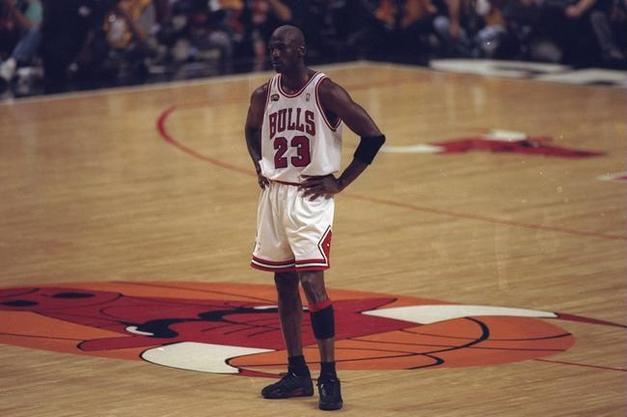
Coach Phil Jackson was nervous. That much was obvious from the way he paced the floor, hands in his pockets. It was game five of the 1998 NBA Finals, but the Chicago Bulls weren’t playing like champions and Jackson was getting damned tired of it. The whole team was stiff and most importantly, their star player, Michael Jordan, was having a bad night (he only made 9 out of 26 shots). For basketball fans, this is nothing new. They know that the game is very “streaky,” which means that past performance greatly affects future performance (even though in theory every possession and every game stands on its own).  And Jordan was in a really bad rut. Jackson needed to find a way to turn him around. Jackson had known that part of Jordan’s problem was that he was very gifted physically, which meant that, at times, he could take short cuts on strategy. Jackson realized that on this night, Michael Jordan was taking a lot of crappy shots. It was like he was trying to win the game through force of will alone (something he had done previously many times), but this time it wasn’t working. They lost the game.

Phil Jackson knew that he needed to help his superstar get back on track and it seemed like the harder Jordan tried to make shots, the worse things got. How was he going to turn things around? He couldn’t actually do anything to make the ball go into the basket…..then coach Jackson had a brainwave. He knew that the game of basketball is about percentages. Despite all of the highlight footage and the dramatic and amazing plays, basketball essentially come down to maximizing your CHANCES. That doesn’t mean that it always goes your way. Like Vegas, the casino will let you win some money, but the odds are always in their favor. The problem with Jordan during game five wasn’t that he was MISSING shots, it was that he was TAKING bad ones to begin with. The key to getting back into the flow of the game was to focus on getting good shots (i.e. open jump shots, easy layups, etc.) whether or not those shots actually went into the basket. Jackson needed to remind Jordan to focus on good shot selection rather than on making baskets. Jordan can score points on really bad even impossible shots and it had gotten him into trouble. He had turned a game of skill into a game of chance.

The next night was game 6 and Jackson and Jordan were prepared. They understood the difference between what they could control (the types of shots to take) and what they couldn’t control (whether or not the ball actually went through the basket). As a result, Jordan was more relaxed and more fluid, but no less determined. The Bulls were going to run their offense the way it should be run. If the basketball didn’t cooperate then there was nothing they could do about that. Jordan stepped out onto the court with the same swagger he had throughout the season. He remembered what he had known all along – don’t let the bad shots get you down. Every play is a chance to start again. Focus on the things you can control and let go of the things you can’t. Play loose. Play free. Play aggressive. Let the game come to you.

In the end, Jordan still missed over half of his shots (57% missed), but he and the team were much more selective. They had put themselves in the position to win which was really all that they could hope for. The final moments of that game, for those who don’t know, have become labeled one of the greatest performances in NBA history (Jordan making a steal with 16 seconds left and then making a shot to win the game), but there is a more humble story behind that iconic shot. Two men…Coach Phil Jackson and player Michael Jordan…learning to let go. 

Image


Beware thy word “Efficiency”

20 Dec
Image

“He who chases two rabbits catches neither.” The same is true of efficiency and effectiveness.

I’m going to offer you one million dollars for you to pick one of these words….and only one…. to define your life or business; “effective” or “efficient.” Which one do you pick? The answer is that you should pick effective. Today’s article explains why.

Let me start with what efficiency really means. Being efficient means that you pay attention to the cost/benefit of your actions. It means that you increasingly spend less time, or less money, or less effort than you did to get the same result. It means that you calculate your return-on-investment and came out ahead. Above all else, it means that you make sure that you are not putting in more than you are getting out. Efficiency means that you value fairness, logic, and security. Efficiency means that you are smart and careful.

How is this different than being effective? Well, being effective means that you are willing to take risks. It means that you focus on getting the job done regardless of the cost. It means that come hell or high water (and if you’re trying to achieve anything of significance there will be high water) you are going to achieve what you set out to do. Effectiveness means that you execute even if you waste some resources along the way. Effectiveness means that you value success, learning, and adventure.

So, in a way these two drives complement each other. One is creative (effective) and one is corrective (efficiency). But there is a problem. The default setting of the universe is corrective. You don’t have to do anything to make that part of it happen. Just think about how hard it is to climb a mountain and how easy it is to fall off one. Or how hard it is to build a reputation and how easy it is to lose one. The world’s thermostat is naturally set at “cold, unforgiving, and unimpressed.” So in order to achieve anything you have to be absolutely, obsessively, retardedly committed to the goal (even then there are no guarantees) just to offset this natural downward pull.

Since we were children, we’ve been taught to focus on how much effort we put in. During group projects we were very aware who was putting in more effort (see “social loafing”) because we wanted it to be “fair.” When we got older we were taught to focus on return-on-investment and think in terms of cost/benefit ratios. I’m here to tell you that if you really want to achieve an amazing result, then you need to forget about all that bullshit.

Most people think that efficiency is a good thing and there are certain conditions when it’s appropriate (you’re running a large project or organization). But thinking in terms of how you manage your life, there is far more downside than upside.

Why does focusing on efficiency suck so hard? Well, because when we set out to achieve some awesome goal, we start by focusing on the result. We start by trying to be effective. Then, because results are slow to appear, we slowly start second-guessing their actions. Instead of asking, “is this moving me toward my goal?” we start asking, “is this particular action the BEST use of my time?” “Should I make some cold calls or should I do some more marketing?” “Should I go for a run or lift weights?” Eventually, we become so exhausted with trying to maximize our choices that we forget that the ultimate purpose wasn’t to “spend their time wisely” but to actually accomplish a goal.

This phenomena is so common I call it, “the effectiveness to efficiency flip.” It’s just another one of Resistance’s favorite tricks (read The Power of Resistance). Therefore, since you can only have one primary question, (if you doubt this, read the definition of “primary”) you must choose wisely.

Is this the BEST use of my time?

Is this moving me toward my goal? ✓

So, how do you break this bad habit? Well, awareness is a good start. Understand that efficiency is really only a concern for a fully developed system or organization (I’ll be saying more about this in a future article). So if you are starting, then you must absolutely obsess about being effective. Trying to be efficient is just an excuse to keep yourself from taking action. The second thing you must do is stop trying to be BOTH efficient and effective. I know it seems innocent enough (which is precisely why it’s dangerous), but as I outlined above, efficiency and effectiveness are actually pulling you in two different directions. You must get off the fence and decide.

Second, let go of your ego. The default setting of the world is, “waste is bad.” God forbid you were to spend your time or resources doing something that didn’t pan out. I think it’s a fair estimate to say that for every 100 units of effort you should expect roughly 10 units of result. So, that’s about 90 units of waste right there. And this is being generous. Don’t listen to the 99.9% of the people who have convinced themselves to play it safe. Follow the 1% who are brave enough to break a few eggs and have them land on their face.

“Bang for the buck” it not what you are looking for when it comes to achieving your goals. What you are looking for is BANG. This is because the reality of all noble pursuits is that you will always put in 100 times the effort than you think you’ll need to. That’s exactly why so few people succeed. They’ll spend all of their time looking for a short cut, looking for a way to only put in what they’re getting out. They view their place in the world as a series of transactions. Give and take. Tit for tat. They are always guarded to make sure they don’t end up with the short end of the stick. The reality is that you want to be successful you have to love the short end of the stick.

The true masters will tell you that this ratio is perfectly acceptable and will be more than you ever need to achieve everything that you want.

10 Ways to Change Your Mood…

20 Dec
Different-Mood-Disorders

1.) Moral – Do something nice for someone else. Apologize for doing something wrong. Donate some money. Doing good things make us feel better.

2.) Physical – Stop and take 10 deep breaths. Eat some fruit. Drink some water. Move your body. Work out. Do some jumping jacks. Change your physiology, change your mood.

3.) Theatrical – Watch a comedy movie that you haven’t seen before. Watch cat videos on YouTube (or other things that you find funny).

4.) Literary – Do some free writing about how you feel. Commit to at least 10 minutes (important) and don’t judge as you go (more important).

5.) Emotional (our normal go-to solution) – Do some shopping. Eat some ice cream. Not the best solution in the long run, but hey, sometimes it helps.

6.) Musical – Listen to upbeat music. Sing along. Loudly and badly. Force yourself to do it (you don’t feel like being silly, which is why you should).

7.) Behavioral – Just ignore your bad mood for the moment. Focus on the task at hand and just get it done. You might feel better once it’s over.

8.) Relational – You’ll probably already do this if you need it, but call someone for a quick chat. If it’s serious and you don’t have someone just call, go to http://www.befrienders.org/

9.)  Mathematical – “Pain + resistance = suffering.” You can’t control pain. It just happens. Maybe you should stop resisting it? Acknowledge how you feel and look forward to brighter days.

10.) Teleological – Where is this all going? Your life is a winding path and that means that some days are going to be awesome and some are going to suck. Take a long view and remember, that “this too shall pass.”

Above all, my rule of thumb about emotions is that you don’t want to spend too much time analyzing them. Now, if you have recurring problems, mood swings, negative attitude, then do some self-work or go see a therapist, but in general, the more time you spend thinking about your emotions the more powerful they get. It’s like feeding the fire with fuel. Instead, what you want to do is the exact opposite of what you feel like doing. Your mood is a reflection of something that is bothering you. Something that is making you feel vulnerable. It is a self-protective measure. So, in order to change your mood you need to remind yourself that the world isn’t nearly as scary and dangerous as you feel like it is. In order to do that you need to remind yourself that your mood is valid and then you need to move and act. It’s counter-intuitive for high-achievers, but when it comes to your mood, thinking too much about what’s bothering you often makes it worse.

Video

My Educational Path

18 Dec

This is my response to some questions about my path before and after Harvard Divinity School. Since I get questions about this a lot, I figured I just post this here as well.