Archive | Uncategorized RSS feed for this section

“Ta-dah!” How Clowns Handle Mistakes

6 Mar

The following excerpt comes from the amazing book Improv Wisdom (2005) by Patricia Ryan Madson. 
Image

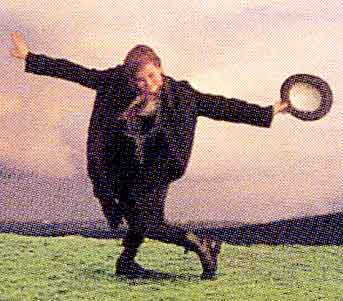
Matt Smith, a wonderful Seattle improv teacher and solo performer, taught me a liberating game that can be used as a response to a personal screwup. He calls it “The Circus Bow.” Matt claims this is how circus clowns deal with a slip in their routines. Instead of shrinking and berating himself silently with, “Oh, no, I really blew it!” the clown turns to the crowd on one side and takes a magnificent bow with his hands extended and his arms high in the air, proclaiming “Ta-dah!” as if he had just pulled off a master stunt. He then turns to face the other side of the audience and repeats the bow, “Ta-dah!” Doing it in both directions allows him a 360-degree view of where he is. 

The virtue of this is that it pulls his attention out into the world again, looking around and standing tall. This engaged and forward-looking vantage point is an excellent place to be after a blooper. It is more common to focus inward when a blunder occurs. “How could I have done that?” The body shrinks and withdraws. Instead, a mistake should wake us up. Become more alert, more alive. Ta-dah! New territory. Now, what can I make of this? What comes next? 

…Jim Thompson, author of Positive Coaching…encourages his athletes to play aggressively, to really go for it, and when they do make a blunder in practice to silently say “Ta-dah!” In no time all of his players were not only mumbling it under their breath, but running full tilt down the court shouting “Ta-dah!” with arms outstretched and big smiles on their faces. 

…The next time you notice that you have made a mistake, done something that feels silly or dumb, do the circus bow. Raise your arms in the air, smile, turn left and right. Say, “Ta-dah!” brightly. Then look around and see what needs to be done next and do it. (excerpted from pages 106-109). 

For Fear to be a King

6 Feb

We never know how high we are
Till we are called to rise;
And then, if we are true to plan,
Our statures touch the skies—

The Heroism we recite
Would be a daily thing,
Did not ourselves the Cubits warp
For fear to be a King—

– Emily Dickinson

How Flickr Went from Online Game to Photo-Sharing Giant

5 Feb

The following is an excerpt from the book The Start-up of You by Reid Hoffman and Ben Casnocha.

Flickr is one of the most widely used photo hosting and sharing websites, with an estimated five billion-plus images on its servers. But the company wasn’t started by photography pros. In fact, its founders, Caterina Fake and Stewart Butterfield (who teamed up with Jason Classon), didn’t even set out to start a photo-sharing service at all.

Their original product, rolled out in 2002, was a multi-player online game called Game Neverending. Most gaming platforms at that time allowed one or at most a few people to play the same game together at the same time. But Caterina and Stewart wanted to create a game that hundreds of people could play at the same time. To this end, the plan was to build something they saw less as a game and more as a “social space designed to facilitate and enable play.” To attract and retain players to this social space, they pumped out social features like groups and instant messaging, including one add-on to the instant messenger application that allowed players to share photographs with one another. As with most features of the game, the photo-sharing add-on was developed very quickly – it only took either weeks from idea to implementation.

When photo sharing was first added to Game Neverending in 2004, it was no big deal – photographs were just another thing players could trade with one another, like the objects they would collect during the course of the game. However, it didn’t take long for the photo-sharing capability to eclipse the game itself in popularity. As this became increasingly apparent to the leadership team, they were faced with a decision: Should they try to expand their new photo-sharing platform while sticking to their long-term plan and continuing to develop Game Neverending, or should they put the game (and its twenty thousand avid users) on hold to devote the majority of their precious resources to photo sharing? They decided to deviate from the original plan and focus exclusively on building the photo application and the photo-sharing community that went along with it. They called it Flickr.

Flickr soon became the photo-sharing service of choice for millions of Internet users. Its social features – tagging and sharing – grew naturally out of the social DNA that defined the original online game, even as they differentiated the service in response to market feedback. In 2005 Yahoo! acquired the company, making it a Web 2.0 poster child. But more than just a Silicon Valley success story, the evolution of Flickr is a case study in smart adapting: its founders were in constant motion early on, tried many things to see what would work, and nimbly shifted their plans based on what they learned.

– Reid Hoffman & Ben Casnocha (The Start-Up of You, Chapter 3, “Plan to Adapt”, pages 52-53)

The Daring Greatly Dude

4 Feb

The following excerpt comes from Brene Brown’s book Daring Greatly.

——

“As I held the quote in my hand (Roosevelt’s famous speech about daring greatly), I remembered a conversation that I had just had with a guy in his very early twenties. He told me that his parents sent him link to my TED talks and he really liked the idea of Wholeheartedness and daring greatly. When he told me that the talks inspired him to tell the young woman he’s dating for several months that he loved her, I winced and hoped for a happy ending to the story.

No such luck. She told him that she thought he was “awesome” but that she thought they should date other people. When he got back to his apartment after talking to his girlfriend, he told his roommates what had happened. He said, “They were both hunched over their laptops and without looking up one of them was like, ‘What were you thinking, man?'” One of his roommates told him that girls only like guys who are running the other way. He looked at me and said, “I felt pretty stupid at first. For a second I was mad at myself and even a little pissed at you. But then I thought about it and I remembered why I did it. I told my roommates, ‘I was daring greatly, dude.'”

He smiled when he told me, “They stopped typing  looked at me, nodded their heads, and said, ‘Oh. Right on, dude.'”

Daring greatly is not about winning or losing. It’s about courage. In a world where scarcity and shame dominate and feeling afraid has become second nature, vulnerability is subversive. Uncomfortable. It’s even a little dangerous at times. And, without question, putting ourselves out there means there’s a far greater risk of feeling hurt. But as I look back on my own life and what Daring Greatly has meant to me, I can honestly say that nothing is an uncomfortable, dangerous, and hurtful as beleiving that I’m standing on the outside of my life looking in and wondering what it would be like if I had the courage to show up and let myself be see.

So, Mr. Roosevelt…I think you nailed it. There really is “no effort without error and shortcoming” and there really is no triumph without vulnerability. Now when I read that quote, even when I’m feeling kicked around, all I can think is, Right on, dude.”

Brene’ Brown, Daring Greatly, p. 248-249.

It is Not the Critic Who Counts

30 Jan

“It is not the critic who counts; not the man who points out how the strong man stumbles, or where the doer of deeds could have done them better. The credit belongs to the man who is actually in the arena, whose face is marred by dust and sweat and blood; who strives valiantly; who errs, who comes short again and again, because there is no effort without error and shortcoming; but who does actually strive to do the deeds; who knows great enthusiasms, the great devotions; who spends himself in a worthy cause; who at the best knows in the end the triumph of high achievement, and who at the worst, if he fails, at least fails while daring greatly, so that his place shall never be with those cold and timid souls who neither know victory nor defeat.”

– Theodore Roosevelt

The Organic Model of Change by Ken Robinson

28 Jan

discipleship - plant growing

“For more than three hundred years Western thought has been dominated by the images of industrialism and the scientific method. It’s time to change metaphors. We have to move beyond linear, mechanistic metaphors to more organic metaphors of human growth and development.

A living organism, like a plant, is complex and dynamic. Each of its internal processes affects and depends on the others in sustaining the vitality of the whole organism. This is also true of the habits in which we live. Most living things can only flourish in certain types of environment, and the relationships between them are often highly specialized. Healthy, successful plants take the nutrients they need from their environment. At the same time, though, their presence helps to sustain the environment on which they depend. There are exceptions, like the Leyland cypresses that just seem to take over everything in their path, but you get the idea. The same is true of all creatures and animals, including us.

Farmers based their livelihoods on raising crops. But farmers do not make plants grow. They don’t attach the roots, glue on the petals, or color the fruit. The plant grows itself. Farmers and gardeners provide the conditions for growth. Good farmers know what the conditions are, and the bad ones don’t. Understanding the dynamic elements of human growth is as essential to sustaining human cultures into the future as the need to understand the ecosystems of the natural world on which we ultimately depend.”

Ken Robinson (The Element, 2009, pg. 257-258)

Why You Don’t Need a Business Plan

13 Jan
Image

You might not know where you’re going, but you have to keep moving.

One of my favorite topics of conversation, much to the dismay of my dinner companions, is the tension between making plans and taking action. As the name of my blog suggests, I subscribe to the “act first” philosophy, but I certainly understand the need for detailed plans. Especially when the goal you want to achieve will take a long time and will involve lots of people.

However, most of the time we use planning as an excuse. It becomes a rationalization to keep us from acting and this is particularly true when trying to start a business. Any good expert on entrepreneurship will tell you to start with some market analysis and a strong business plan. I think they’re wrong. Here is my alternate approach: start with inspiration.

The famous screen-writing coach Robert McKee has useful definition for a “hack.” He says a hack is a writer, “who second-guesses his audience.”  Instead of using his muse to drive his work he asks himself what the market can support. He condescends. He may make some money by selling some snake oil, but at what cost to his reputation and his soul. Steven Pressfield expands,

“The hack is like the politician who consults the polls before he takes a position…it can pay off, being a hack. Given the depraved state of American culture, a slick dude can make millions being a hack. But even if you succeed, you lose, because you’ve sold out your Muse, and your Muse is you, the best part of yourself, where your finest and only true work comes from.”

“That all sounds nice in theory,” you might say, “but there are practical considerations. No one is going to hand you money without a solid business plan.” Of course. I would never argue against this point. It isn’t wrong. But it is incomplete. The entrepreneurship process doesn’t start with a business plan. It starts with your passion. It starts with a compulsion to solve a problem.

Steve Jobs was quoted saying, “…often times the customer doesn’t even know what he wants until you show it to him.” So, how far can market research take you when the markets don’t even exist yet? If you truly want to be an innovator then you need to consider that the mechanical models of business development are lacking. No one can predict the future so if you want to succeed then you’ll have to do something scary and profound…you’ll have to make decisions in a fog. Incomplete information is the playground of the leader and the entrepreneur. Learn to enjoy the gray. Learn to embrace it. All creation is born in it.

Michael Jordan and the Art of Letting Go

28 Dec

Image

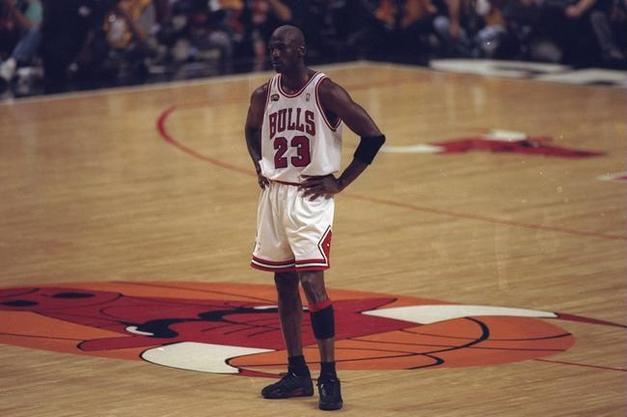
Coach Phil Jackson was nervous. That much was obvious from the way he paced the floor, hands in his pockets. It was game five of the 1998 NBA Finals, but the Chicago Bulls weren’t playing like champions and Jackson was getting damned tired of it. The whole team was stiff and most importantly, their star player, Michael Jordan, was having a bad night (he only made 9 out of 26 shots). For basketball fans, this is nothing new. They know that the game is very “streaky,” which means that past performance greatly affects future performance (even though in theory every possession and every game stands on its own).  And Jordan was in a really bad rut. Jackson needed to find a way to turn him around. Jackson had known that part of Jordan’s problem was that he was very gifted physically, which meant that, at times, he could take short cuts on strategy. Jackson realized that on this night, Michael Jordan was taking a lot of crappy shots. It was like he was trying to win the game through force of will alone (something he had done previously many times), but this time it wasn’t working. They lost the game.

Phil Jackson knew that he needed to help his superstar get back on track and it seemed like the harder Jordan tried to make shots, the worse things got. How was he going to turn things around? He couldn’t actually do anything to make the ball go into the basket…..then coach Jackson had a brainwave. He knew that the game of basketball is about percentages. Despite all of the highlight footage and the dramatic and amazing plays, basketball essentially come down to maximizing your CHANCES. That doesn’t mean that it always goes your way. Like Vegas, the casino will let you win some money, but the odds are always in their favor. The problem with Jordan during game five wasn’t that he was MISSING shots, it was that he was TAKING bad ones to begin with. The key to getting back into the flow of the game was to focus on getting good shots (i.e. open jump shots, easy layups, etc.) whether or not those shots actually went into the basket. Jackson needed to remind Jordan to focus on good shot selection rather than on making baskets. Jordan can score points on really bad even impossible shots and it had gotten him into trouble. He had turned a game of skill into a game of chance.

The next night was game 6 and Jackson and Jordan were prepared. They understood the difference between what they could control (the types of shots to take) and what they couldn’t control (whether or not the ball actually went through the basket). As a result, Jordan was more relaxed and more fluid, but no less determined. The Bulls were going to run their offense the way it should be run. If the basketball didn’t cooperate then there was nothing they could do about that. Jordan stepped out onto the court with the same swagger he had throughout the season. He remembered what he had known all along – don’t let the bad shots get you down. Every play is a chance to start again. Focus on the things you can control and let go of the things you can’t. Play loose. Play free. Play aggressive. Let the game come to you.

In the end, Jordan still missed over half of his shots (57% missed), but he and the team were much more selective. They had put themselves in the position to win which was really all that they could hope for. The final moments of that game, for those who don’t know, have become labeled one of the greatest performances in NBA history (Jordan making a steal with 16 seconds left and then making a shot to win the game), but there is a more humble story behind that iconic shot. Two men…Coach Phil Jackson and player Michael Jordan…learning to let go. 

Image


Video

My Educational Path

18 Dec

This is my response to some questions about my path before and after Harvard Divinity School. Since I get questions about this a lot, I figured I just post this here as well.

Video

Some Career Advice…

18 Dec

I went to Harvard Divinity School because I thought it would prepare me for a life of meaning. It did. When I was asked to provide some career advice to other Harvard graduates, I jumped at the chance. I didn’t want to talk about networking, or finding a mentor….all of those things we’ve heard before. I wanted to address the fact that no matter what advice you’re given….your own career path is going to twist and turn and therefore the best that you can hope for is to learn along the way.